
Is my cat bored? The signs, what's behind them, and a week to fix it
Quick answer
Probably, if it sleeps all day and tears about all night, scratches the furniture rather than the post, over-grooms, bolts its food and asks for more, or follows you around crying for something it can't name. Boredom is a cat with energy and nothing to spend it on. The fix is cheap: two short hunts a day, something new each week, and a home with height, hiding and scratching built in. A sudden change in any of this is a vet visit first.
Cats are good at looking bored even when they aren't, which makes this a harder question than it sounds. A cat asleep in a patch of sun for six hours is a cat having a good day. A cat asleep for six hours and then wrecking the hall at 3am is a different animal.
Here's how to tell the difference, what each sign is usually about, the cases where it isn't boredom at all, and a week of small changes that will show you which one your cat needed.

First: when it isn't boredom
Before the list, the exception, because it matters more.
A cat that has suddenly changed (hiding all the time, off its food, not grooming, going outside the tray, not playing even when you try) is not bored. It may be unwell or in pain, and cats hide both well. That's a vet appointment, this week, before anything else. People search "is my cat bored or depressed", and the honest answer is that low mood in cats usually shows as less (less eating, less grooming, less interest), while boredom shows as more (more noise, more destruction, more energy at the wrong time). If the vet finds nothing, come back here; it's probably boredom, and boredom is fixable.
The signs, and what each one means
Asleep all day, mad all night. The classic. Cats are naturally most active at dawn and dusk, and a cat with nothing to do in the day sleeps through it and spends the energy at 3am. Behind it: no hunt in the day, nothing to watch. The fix: a play session in the evening that ends in a catch, then food.
Scratching the sofa, not the post. Cats scratch where they wake and where they greet. If the post is in the hall and the sofa is where you sit, the sofa wins. Behind it: the post is in the wrong place, or there isn't one. The fix: a post by the sofa, a pinch of catnip on it.
Over-grooming. A bald patch on the belly or inside leg, licked rather than scratched. Over-grooming can be skin or pain, so this one goes to the vet first. If the vet rules those out, it's often a cat soothing itself for want of anything else to do.
Bolting food and begging. Thirty seconds at the bowl, then crying for more an hour later. Behind it: eating is the only event in the day. The fix: make food take effort (a puzzle feeder, or kibble scattered on a mat), and split meals.
Following you about and crying. Not for food, not for the door, just at you. Behind it: you are the only interesting thing in the house. The fix: a hunt, twice a day, at the same times. Most cats stop shadowing once they know play is coming.
Ankle attacks and ambushes. A cat that stalks you round corners is hunting the only moving thing available. The fix: give it something else to hunt, before it hunts you. Never play with your hands.
Knocking things off surfaces while looking at you. Boredom plus an audience. It works, which is why it continues. The fix: ignore it, and add play elsewhere in the day.
Door-dashing and crying at the door. Energy and curiosity with nowhere to go. The fix: more to do inside, a window perch, and give it a few weeks. We've written about the outdoors question in Keeping an indoor cat happy.
Stopped playing. If gradual, the toys have gone stale and the wand's in a drawer. If sudden, vet.

Photo by Thức Trần on Unsplash
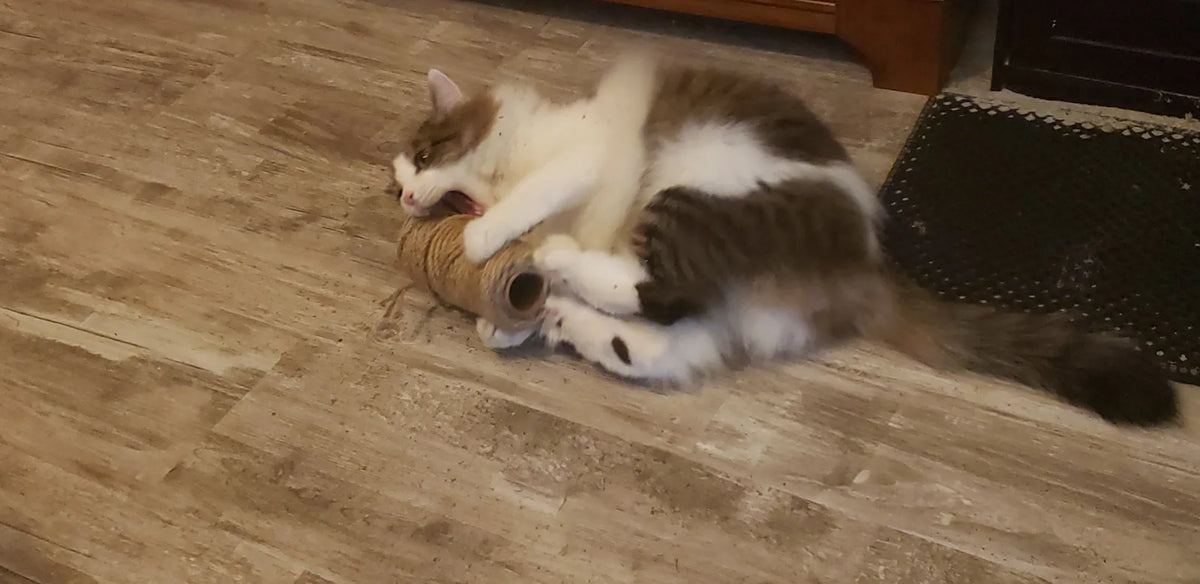
One of these is a cat. Several together, in a cat that's otherwise well, is a bored cat.
Why indoor cats get bored
A cat outdoors has a job: patrol a territory, hunt several small things a day, climb, hide, watch, scratch, investigate every new smell. It's a full day. A cat indoors in a home set up for people has a bowl, a sofa and a tray, and nothing to do between meals. It isn't that indoor cats are worse off; it's that the home has to supply what the outdoors did. That's the whole subject of Keeping an indoor cat happy, and the list of things to supply is in Cat enrichment: 12 ideas for indoor cats.
The seven-day plan
One change a day, so you can see which one lands. Keep all of them.
Day 1: the evening hunt. Ten minutes with a wand toy before dinner. Let it hide, dart, pause. End with a catch the cat can hold and kick, then feed. Watch what the night is like.
Day 2: the morning hunt. Same, before breakfast. Two a day is the routine; most cats start reminding you.
Day 3: a box. Any delivery box, a hole cut in the side, left somewhere new. A pinch of catnip inside if your cat responds.
Day 4: move the post. To where the cat scratches now. If there's no post, this is the day to get one; corrugated board for the ones that scratch flat, a tall sisal post for the ones that go up.
Day 5: rotate the toys. Everything into a drawer except three. Swap weekly from now on.
Day 6: make food work. Scatter dry food across a mat, or put a few biscuits in a toilet-roll tube with the ends folded. If that goes well, a puzzle feeder next week (Catit's Senses range or a Trixie activity board).
Day 7: a window. Clear a sill, or fix a perch under one, and put a bird feeder outside if you can. Then sit back and see what a week has done.
By the end of the week most bored cats are sleeping at night, using the post and waiting for the hunt. If nothing's changed, go back to the vet question.
The Chew & Chase Play Set covers days 1, 2, 4 and 5 in one box: three kicker toys, a mouse on a wand, a corrugated scratch board and a 60ml catnip spray, £21.99. None of the toys contain catnip, so they don't go stale; the spray is how you add it.
Where catnip fits
For the cats that respond, catnip is the quickest ten minutes of exercise an indoor cat gets: a pinch crushed between the fingers on a toy or the floor, and the cat rolls, kicks and chases nothing, then sleeps. It's also the way to get the new post or box tried. Keep it as a treat, a few times a week rather than daily, so it stays interesting; we've covered that in How to use catnip.
Not every cat responds, and that's genetic; a lot of cats don't. Silvervine usually does the same job for those, and we've written about it in Silvervine for cats. Kittens mostly don't respond until about eight months, and a kitten is rarely bored anyway; it's the two-year-old on the sofa this is for.
Ours is leaf and flower from a family farm in South Africa, picked by hand and air-dried. The 30g pouch is £9.99 as a one-off, or £4.99 for the first pouch on Subscribe & Save and £7.49 every eight weeks after that. If your cat is one of the unmoved, our money-back cat guarantee covers it: tell us within 14 days of delivery and we'll refund, nothing to send back.
Bored or lonely?
The last thing people ask, usually before getting a second cat. Cats aren't pack animals. A cat that follows you about, cries and waits at the door is far more often bored than lonely, and the two daily hunts fix that in a week. A second cat, introduced to a cat that didn't ask for one, is a bigger change than the problem it was meant to solve. Fix the boredom first; if you still want a second cat afterwards, that's a different and happier decision.
Related guides: Keeping an indoor cat happy · Cat enrichment: 12 ideas for indoor cats · How to use catnip · Does catnip calm cats down? · Silvervine for cats · The Catnip Guide
Questions cat owners ask
What are the signs of a bored cat?
Sleeping all day and racing about at night, scratching furniture instead of the post, over-grooming a patch of fur, eating too fast and begging, following you about and crying, attacking ankles, and knocking things off surfaces for a reaction. One is a cat; several together is a bored cat.
How do I know if my cat is bored or depressed?
Boredom shows as too much energy with nowhere to go. Low mood or illness tends to show as less: hiding, not eating, not grooming, not playing even when invited. Any sudden change, especially around eating, litter or hiding, is a vet appointment first. If the vet finds nothing, it's usually boredom, and that's fixable.
Is my cat bored or lonely?
More often bored. Cats aren't pack animals, and a second cat isn't a cure for a cat that wants more to do. Lonely-looking behaviour (following you, crying, waiting at the door) usually drops when two daily play sessions go in.
Why has my cat stopped playing?
If it's gradual, the toys are stale: rotate them and start the wand hunt again. If it's sudden, see the vet; a cat that stops playing without warning is often sore or unwell.
How do I entertain a bored cat?
A wand hunt twice a day that ends in a catch, three toys on rotation, a box with a hole cut in it, a post where it already scratches, food that takes effort to get, and a window with something to watch. Catnip for the cats that respond.
Does catnip help a bored cat?
For the cats that respond, yes: ten minutes of real exercise and something new to investigate, then a sleep. Keep it as a treat rather than daily so it stays interesting. A lot of cats don't respond, and silvervine usually works for those.


