
Silvervine for cats: what it is, how to use it, and which cats it works on
Quick answer
Silvervine is a climbing plant from the mountains of East Asia whose dried fruit and stems set off the same rolling, rubbing reaction as catnip. It works through related scent compounds, and most cats that ignore catnip respond to it. It's sold as powder to sprinkle and sticks to chew.
We sell catnip, so this is a slightly odd article for us to write. But we hear the same thing every week: the cat sniffed the catnip and walked off. A lot of cats don't respond to catnip, and it's genetic; nothing will change it. For many of those cats, silvervine is the answer.
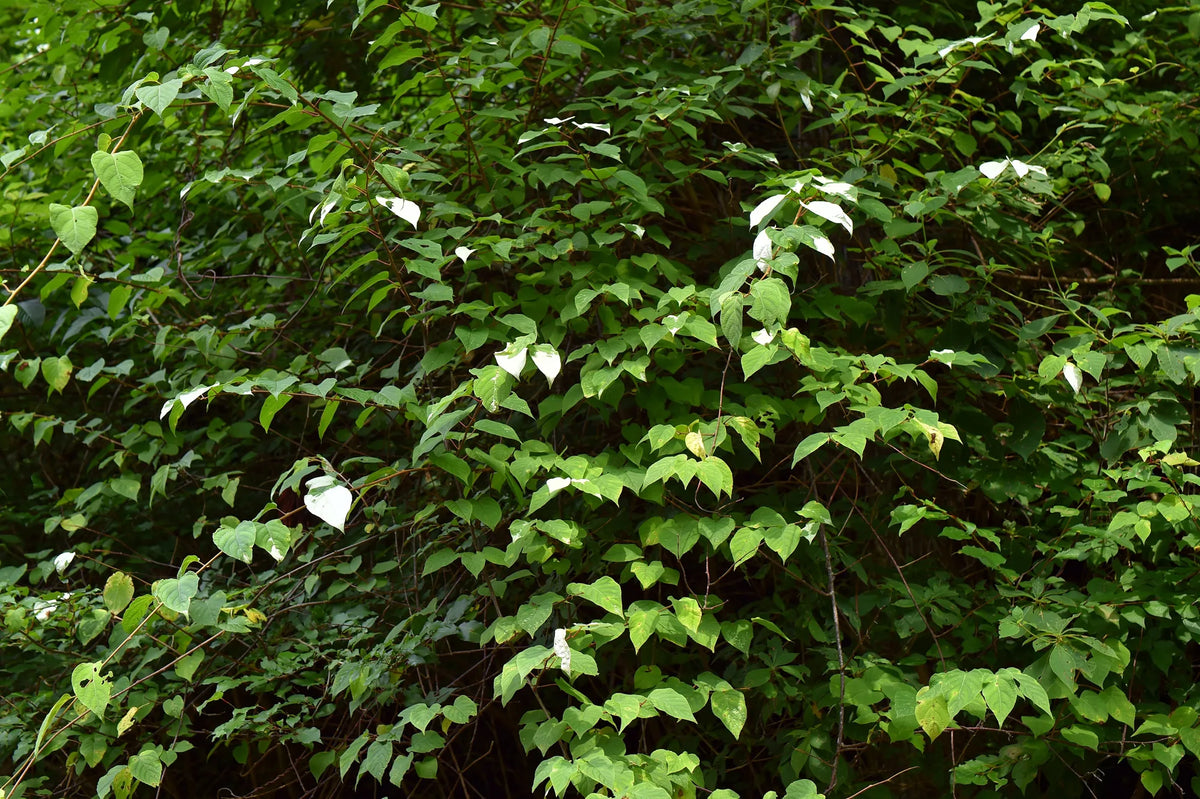
Photo: 小石川人晃, CC BY-SA 4.0, via Wikimedia Commons
What silvervine is
Silvervine is Actinidia polygama, a climbing vine in the same family as kiwi fruit. It grows in the mountains of Japan and China, where it's known in Japanese as matatabi and has been given to cats for centuries.
The parts used for cats are the dried fruit, often the swollen galls that form when a tiny insect lays its eggs in the fruit, and the woody stems. Neither looks like much. To a cat that responds, both are extraordinary.
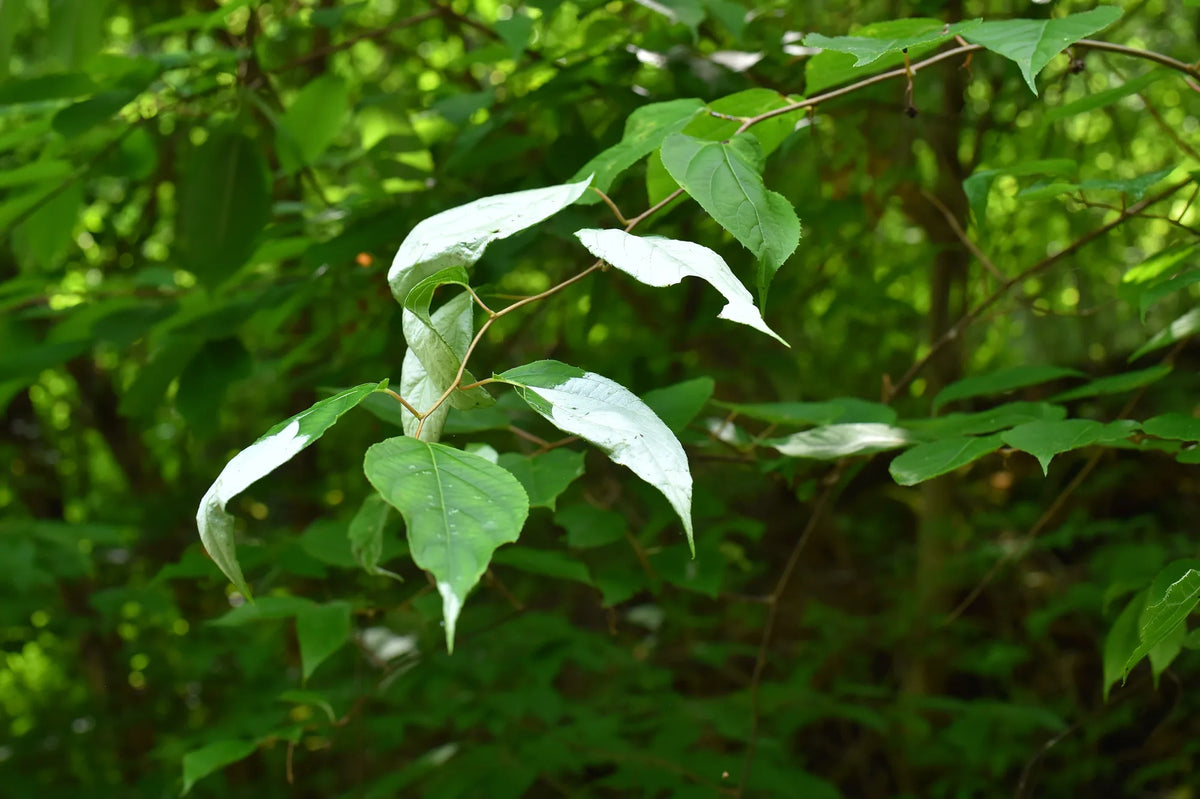
How it works
Like catnip, silvervine works through the nose. Its scent comes from a group of compounds, including actinidine and nepetalactol, that are chemical cousins of catnip's nepetalactone. Because the mix is different, a cat that doesn't pick up catnip's scent can still pick up silvervine's.
The reaction looks the same: sniffing, rubbing the cheeks, rolling, kicking, a burst of play, then a sudden stop and often a sleep. It lasts about the same time, and like catnip, cats set their own limit.
Which cats it works on
The best evidence is a 2017 study published in BMC Veterinary Research, which tested 100 cats with silvervine, catnip, Tatarian honeysuckle and valerian root. About four in five responded to silvervine, more than to any of the other plants, and of the cats that ignored catnip, roughly seven in ten responded to silvervine. It isn't universal: a handful of cats responded to nothing at all, and young kittens often show little interest in either.
That makes silvervine the natural second try, not the first. Catnip is cheaper, easier to find in the UK, and works on a lot of cats. If yours is one of them, there's no need to look further.
The forms, and how to use each
- Powder. Ground dried fruit, usually from the galls. The strongest form. A small pinch on a toy, a scratching post or a bed, exactly as you'd use catnip.
- Sticks. Dried stems for the cat to chew and rub against. Always supervise, and replace a stick once it splinters or gets small enough to swallow.
- Whole fruit galls. Batted about like a ball, or grated into powder.
- Silvervine-filled toys. The same problem as pre-filled catnip toys: the scent fades and can't be topped up. A plain toy with a pinch of powder rubbed in lasts longer.
Whatever the form, buy from a supplier that sells it specifically for cats and says where it comes from.
Is silvervine safe?
It's generally considered safe for cats in the amounts sold for them. It isn't addictive, and cats walk away when they've had enough, as they do with catnip. The practical cautions are about the forms rather than the plant: supervise sticks, use a pinch of powder rather than a pile, and if your cat is pregnant, on medication or has a health condition, ask your vet first.
Silvervine or catnip?
| Catnip | Silvervine | |
|---|---|---|
| Plant | Nepeta cataria, mint family | Actinidia polygama, kiwi family |
| Grown | Widely; ours on a family farm in South Africa | East Asia |
| Scent compound | Nepetalactone | Actinidine, nepetalactol and related compounds |
| Cats that respond | A lot of cats, not all | Most cats, including many that ignore catnip |
| Forms | Dried leaf and flower; spray | Powder, sticks, fruit galls |
| Availability in the UK | Easy to find, lower cost | Mostly imported, usually costs more |
Our advice is to start with catnip. If your cat shrugs, and you bought ours, our money-back cat guarantee covers it: tell us within 14 days of delivery and we'll refund, nothing to send back. Then try silvervine.
Other alternatives
- Valerian root. Works on some cats. Dried root, strongly scented; most people find the smell unpleasant.
- Tatarian honeysuckle wood. Some cats respond to the wood of Lonicera tatarica, sold as sticks or in toys.
- Catmint in the garden. The ornamental Nepeta × faassenii is a cousin of catnip with a milder effect. Some cats roll in it; many ignore it.
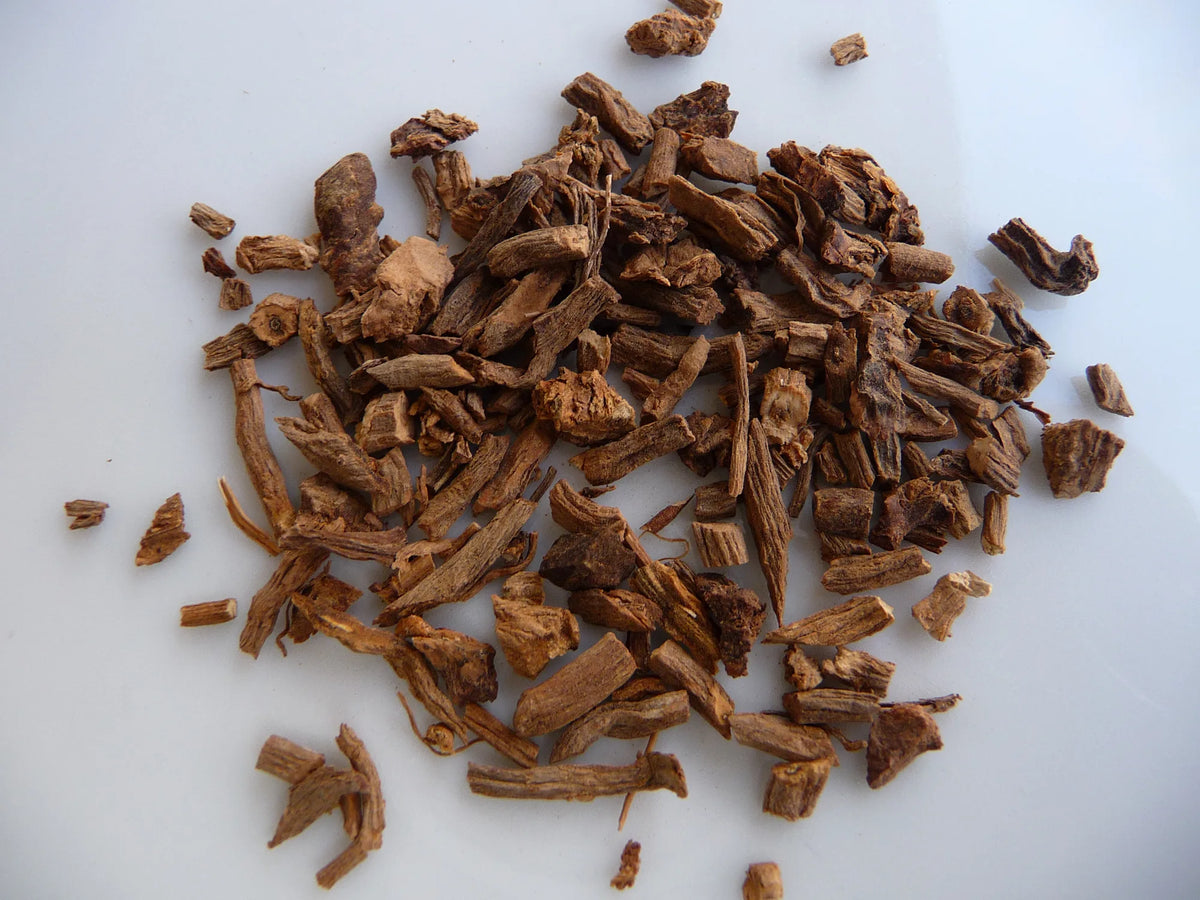
Photo: 3268zauber, CC BY-SA 3.0, via Wikimedia Commons
Where we stand
We grow and sell catnip, and we don't sell silvervine. We'd still rather your cat had something that works. Try catnip first; if it doesn't take, use the guarantee and try silvervine.
For the cats catnip does reach, the Duo is both forms together: the pouch for sprinkling and the spray for posts, beds and carriers.
Related guides: What does catnip do to cats? · Why doesn't my cat like catnip? · Silvervine vs catnip · Catnip alternatives · The Catnip Guide
Questions cat owners ask
What is silvervine?
Actinidia polygama, a climbing vine in the same family as kiwi fruit, from the mountains of Japan and China. The parts sold for cats are the dried fruit and the woody stems.
Is silvervine safe for cats?
It's generally considered safe in the amounts sold for cats, and like catnip it isn't addictive. Supervise sticks and replace them when they splinter. If your cat is pregnant, on medication or has a health condition, ask your vet first.
Is silvervine stronger than catnip?
For cats that respond to both, the reaction is similar. For the cats catnip doesn't reach, silvervine is the one that works, which is why it gets called stronger.
Can I use silvervine and catnip together?
Yes. Some owners alternate them to keep the reaction fresh. Use a pinch of either at a time.
Do you sell silvervine?
Not yet. We grow and sell catnip. If you bought our catnip and your cat doesn't respond, our money-back cat guarantee covers it, and silvervine is the thing to try next.


