
What does catnip do to cats?
Quick answer
Catnip makes most cats sniff, rub, roll and play for about ten minutes, then lose interest and often sleep. The trigger is a scent in the leaf, nepetalactone, which cats pick up through the nose. It's not a drug and it isn't addictive. A lot of cats don't react at all, and that's genetic.
If you've never seen it, the first time is odd. A cat that normally does nothing before noon finds a pinch of dried leaf, pushes its face into it, rubs its cheeks on it, rolls over, kicks the air, chases nothing across the room, then stops, washes, and goes to sleep as though none of it happened.
That's catnip. Here's what's going on.
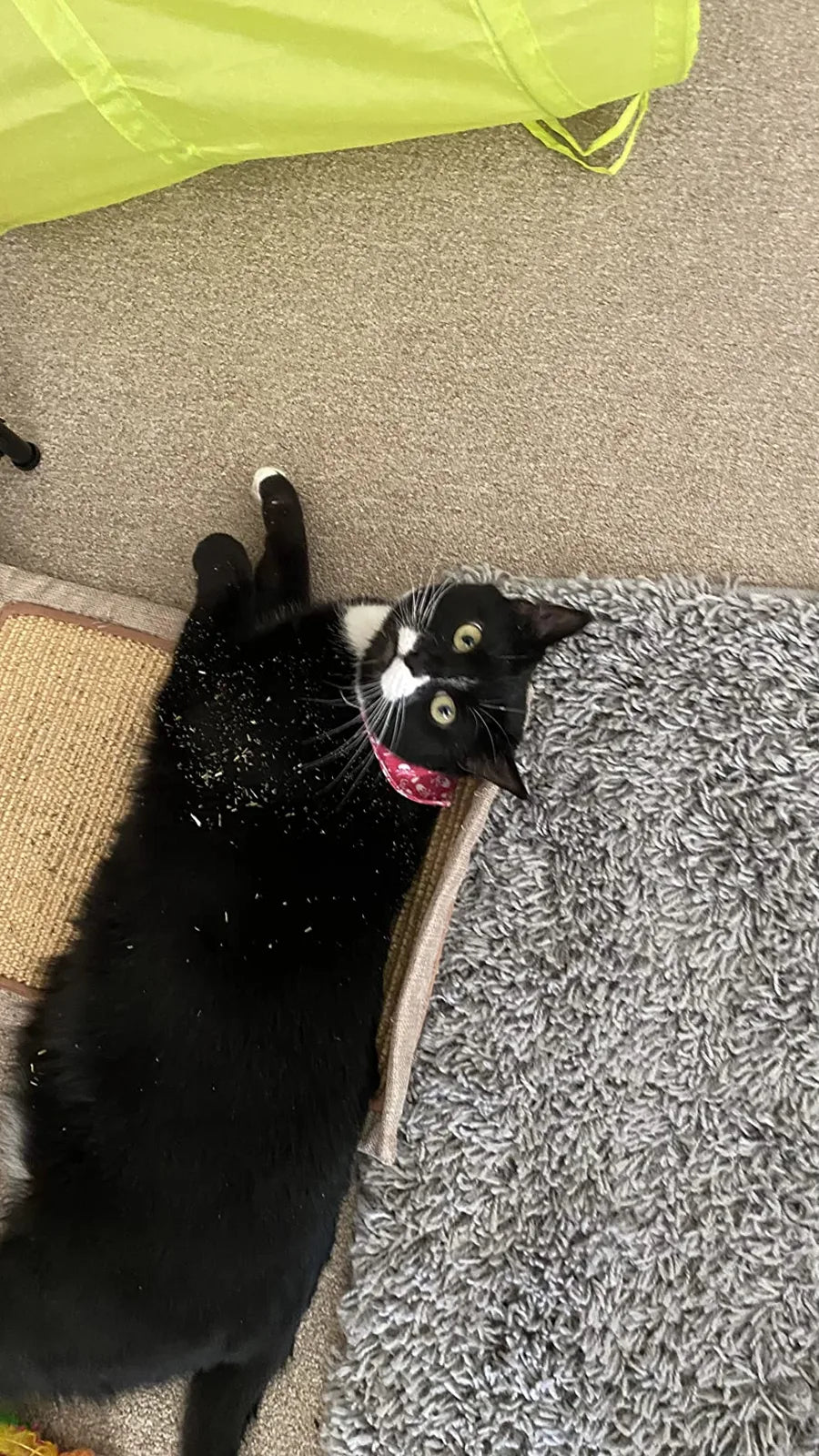
The reaction, in order
Most cats run through the same sequence, and it helps to know what's normal.
- The sniff. The cat finds the scent and goes closer. Pupils widen. This is the moment that decides everything: cats that are going to react, react now.
- The rub. Cheeks, chin and the side of the head pushed against whatever the catnip is on. This is how cats mark things as theirs, and it's why a scratching post with catnip on it becomes the cat's post.
- The roll. Over onto the back, side to side, often with the catnip under them.
- The play. Kicking a toy with the back feet, pouncing, running a lap of the room. For a quiet cat this is the surprising bit.
- The stop. Somewhere around ten minutes in, the cat loses interest. It's not a slow fade; it's a switch.
- The nap. Not every cat, but most. A good session is usually followed by a long sleep.
After that, most cats won't react again for a while, however much catnip is still lying around. That's not the catnip failing. It's the cat resetting.
Why it happens
Catnip is a plant in the mint family, and its leaves and flowers carry an oil called nepetalactone. When a cat breathes it in, the scent reaches receptors in the nose and sets off a pattern of behaviour that looks like play and a little like courtship. Nobody has a complete explanation of why this particular molecule does this to this particular animal, but the effect is consistent: lions, jaguars and bobcats do it too; most tigers, oddly, don't.
Two things follow from the fact that it's a scent.
It's the smell, not the eating. A cat that eats catnip gets at most a bit sleepy. The reaction comes from sniffing, which is why the single biggest improvement you can make is to crush a pinch between your fingers before you use it. Crushed leaf releases the oil; leaf straight from the bag releases very little.
Fresher is stronger. The oil fades over months, faster once the pouch is open or warm. Catnip that's lost its smell has lost its effect, and that's the usual reason a cat "doesn't like catnip any more".
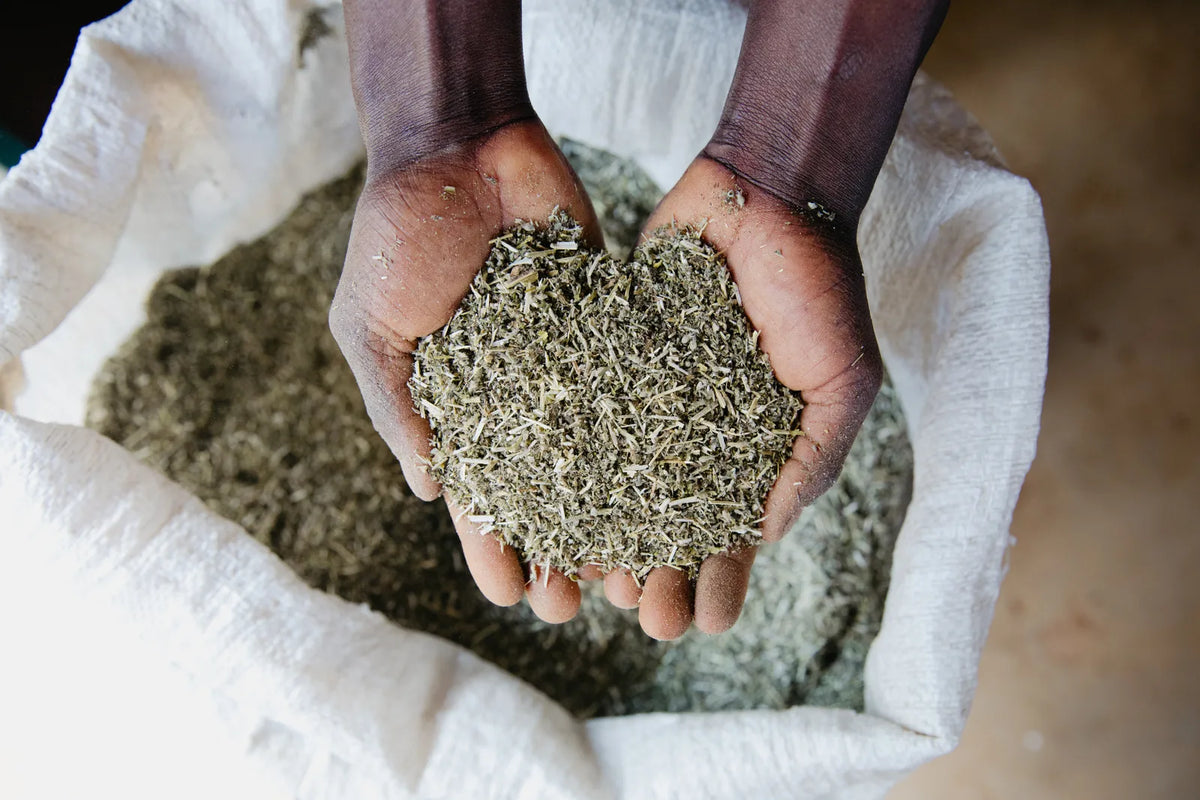
Ours is grown on a family farm at Bushwillow Estate in South Africa, picked by hand and air-dried the same season, and packed leaf and flower only, because that's where the oil is. Stems smell of nothing much, which is why we leave them out.
Is it a drug? Does it make cats high?
It's the question everyone asks and the honest answer is: not in any way the words usually mean.
- The cat is in control the whole time. It walks away when it's had enough.
- There's no tolerance to build and no withdrawal. A cat that has catnip every day isn't dependent on it; if anything, the reaction gets a little duller with daily use.
- There's no overdose. A cat that eats too much might be sick, as with any plant, and then it's over.
- It isn't addictive. Cats don't seek it out between sessions.
The closest comparison is a cat finding a very exciting smell. It's intense, it's short, and it's done.
The cats that don't react
A lot of cats sniff catnip, maybe eat a bit, and walk off. The response is inherited: some cats have it, some don't, and there's nothing you can do to switch it on. It isn't a sign the cat is unwell, unhappy or unusual.
Two more groups don't react, for ordinary reasons. Kittens generally don't respond until around eight months old; before that it's just a leaf. And cats that are stressed or frightened won't play with anything, catnip included, so a new cat in a new home may ignore it for weeks and then suddenly not.
If you buy catnip from us and your cat turns out to be a non-responder, our money-back cat guarantee covers it: tell us within 14 days of delivery and we'll refund, nothing to send back. Then try silvervine, which works on most of the cats catnip doesn't.
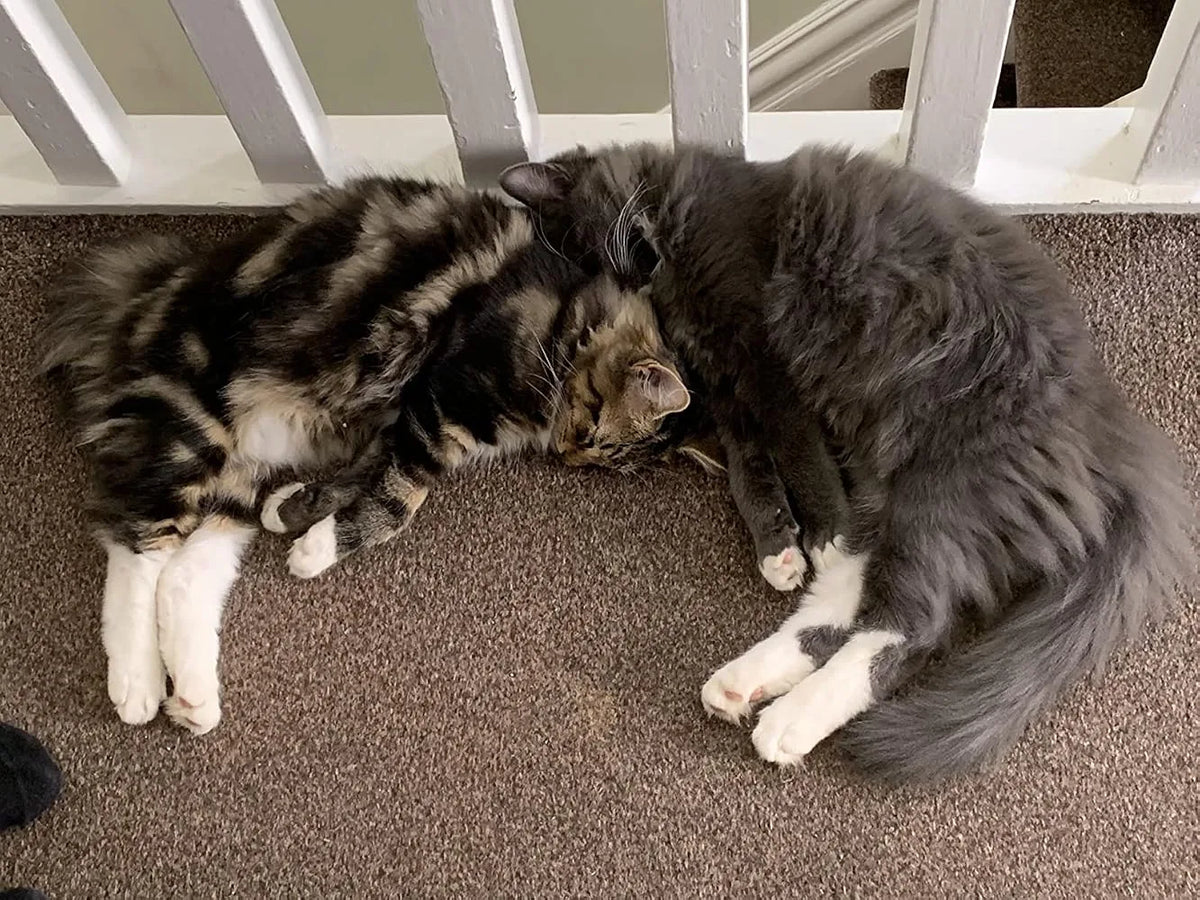
What people use it for
Once you know what it does, the uses follow: getting a cat onto a new scratching post or bed, bringing a stale toy back to life, taking the edge off a carrier before the vet, and giving an indoor cat ten minutes of something to do. We've written the practical version in How to use catnip.
Loose leaf or spray?
Both deliver the same scent. The pouch is for sprinkling and rolling in; the spray, two ingredients, distilled water and catnip hydrosol, is for posts, carriers and beds where you don't want loose leaf. The Duo is both.
Related guides: How to use catnip · How long does catnip last? · Why doesn't my cat like catnip? · The Catnip Guide
Questions cat owners ask
Does catnip make cats high?
Not in the way the word suggests. It triggers a short burst of play-like behaviour through a scent receptor, and the cat is fully in control of it: they stop when they've had enough and there's no hangover. It's closer to a cat finding a very exciting smell than to anything a person would call high.
Why do cats like catnip?
The leaf and flower carry an oil called nepetalactone. When a cat sniffs it, it sets off the same behaviours they use in play and courtship: rubbing, rolling, kicking. Cats that like it are responding to the scent, not to a taste.
How long does the catnip reaction last?
About ten minutes for most cats, sometimes up to fifteen. Then they lose interest and usually won't react again for a while, however much catnip is around.
Does catnip work on all cats?
No. A lot of cats don't react, and it's inherited. Kittens mostly don't react until around eight months. For the cats catnip doesn't reach, silvervine usually does.
Does catnip work if the cat eats it?
Eating it is harmless and mostly makes a cat sleepy. The reaction comes from smelling it, which is why crushing a pinch between your fingers before you use it makes such a difference.


