
How to use catnip: 7 ways to give it to your cat
Quick answer
Take a pinch, crush it between your fingers to release the oil, and put it where you want the cat to go: a toy, a scratching post, a bed or a box. Use the spray for things you can't sprinkle. A pinch at a time is plenty, and most cats are done in ten minutes.
Most people use catnip the same way: open the bag, tip some on the floor, watch the cat sniff it and wander off. Then they decide the cat doesn't like catnip. Usually the cat does; the catnip just wasn't doing anything, because nobody crushed it and it was in the wrong place.
This is how to use it so it works, in the order we'd try things.
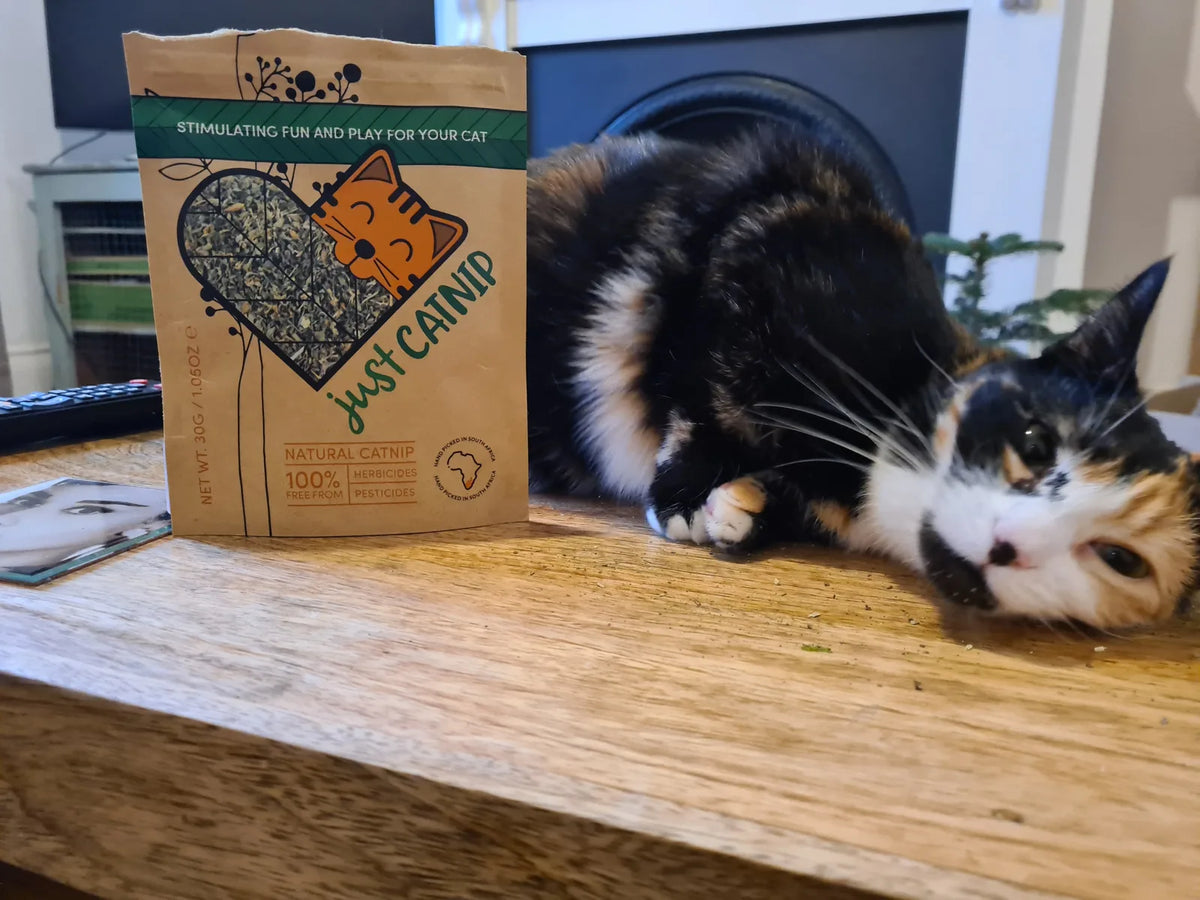
First, the two rules
Crush it. The scent is in an oil inside the leaf. A pinch rubbed between your fingers for a few seconds releases it; a pinch tipped straight from the pouch releases very little. This one step is the difference between a cat that reacts and a cat that doesn't.
A pinch, not a pile. About a quarter of a teaspoon. More catnip doesn't make a bigger reaction; it makes a mess. Fresher catnip makes a bigger reaction, which is a reason to keep the pouch sealed between uses.
The seven ways
1. Rub it into a kicker toy
The most reliable use there is. Crush a pinch and rub it into the fabric of a soft, long toy a cat can grab and kick. Hand it over, step back. When the toy goes quiet a few weeks later, do it again.
2. Sprinkle it on a scratching post
For the post the cat has ignored since you bought it. A crushed pinch worked into the sisal, or two mists of spray if you'd rather not have leaf on the carpet. Most cats are on it within a minute. Repeat every few days until the habit sticks, then stop.
3. Put it in a box
A cardboard box with a cat-sized hole cut in the side and a pinch of catnip inside. Free, and the single most-used thing on this list. Replace the box when it gets tatty.
4. Scent a new bed, blanket or tree
Cats don't trust new things. A pinch rubbed into a new bed, or a mist of spray on a new cat tree, tells the cat it's theirs. Once they've slept on it, you're done.
5. Mist the carrier before the vet
Ten minutes before you need the cat in the carrier, two mists of spray inside it. It doesn't make the trip pleasant, but it makes getting in less of a fight. Loose leaf works too; it just ends up in the carrier.
6. Bring an old toy back
Every toy goes stale. Instead of buying another, crush a pinch into the old one or mist it. The toy becomes new again, which is cheaper than new toys and better for the cat, who liked the old one.
7. Use it to settle a cat after a stressful day
Visitors, fireworks, a house move. A session with catnip and then a sleep is how a lot of owners use it, and it's what we hear most from customers. A pinch on the cat's own bed, in a quiet room, after the noise has stopped. Not during; a wound-up cat doesn't want a toy.
Loose leaf or spray?
Loose catnip is for sprinkling and rolling in: toys, boxes, beds. The spray is for things you can't sprinkle: posts, carriers, furniture. Ours has two ingredients, distilled water and catnip hydrosol, so it's water-clear and doesn't mark fabric. Most people end up using both; the Duo is the two together.
What happens next
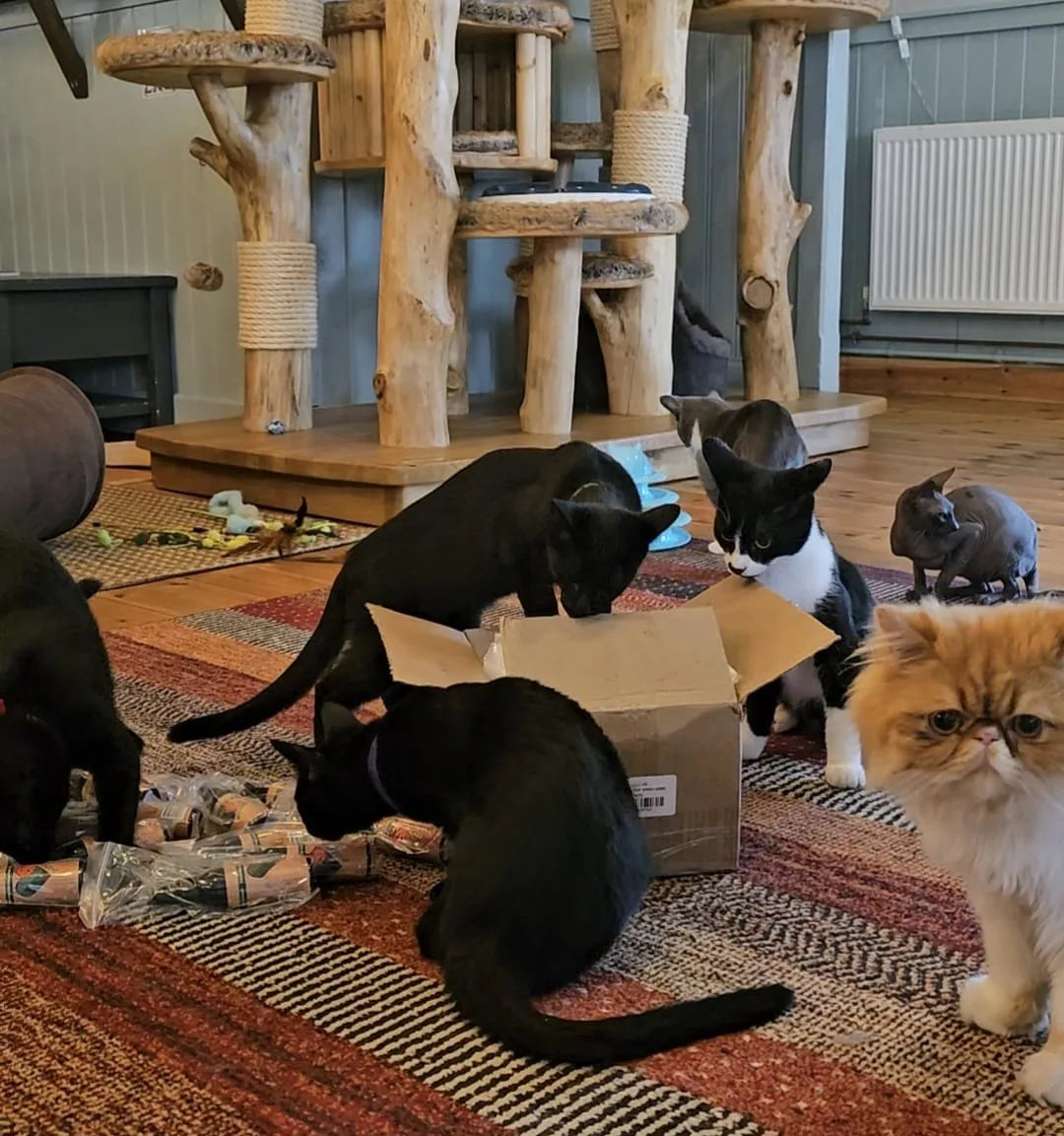
Sniffing, rubbing, rolling, kicking, a bit of running about, for around ten minutes. Then the cat loses interest and usually sleeps. Most cats won't react again for a while, which is normal. We've written separately on what catnip does to cats and how long it lasts.
When it doesn't work
Three things to check, in order:
- Did you crush it? Uncrushed catnip is the most common reason for a shrug.
- Is it fresh? Catnip loses its scent over months, faster if the pouch has been open. If it doesn't smell strongly of catnip to you, it won't to the cat.
- Is the cat old enough? Kittens mostly don't react until around eight months.
If all three are fine and there's still nothing, your cat is one of the many that don't respond to catnip. It's genetic and there's nothing to fix. Our money-back cat guarantee covers it: tell us within 14 days of delivery and we'll refund, nothing to send back. Silvervine is the thing to try next.
Keeping the pouch strong
Reseal it after every use and keep it in a cupboard, away from heat and light. A 30g pouch is around eight weeks of ordinary use, which is why our subscription runs every eight weeks: £4.99 for the first pouch, then £7.49, or £9.99 as a one-off.
Related guides: What does catnip do to cats? · How long does catnip last? · Does catnip go off? · The Catnip Guide
Questions cat owners ask
How much catnip should I give my cat?
A pinch, roughly a quarter of a teaspoon, crushed between your fingers first. More doesn't make the reaction bigger; fresher does. For a cat that's never had it, start with less and see what happens.
Where do you put catnip?
On the thing you want the cat to use: rubbed into a kicker toy, sprinkled on a scratching post, inside a cardboard box, or on a new bed. Not on the floor in the middle of the room; it goes everywhere and the cat has nothing to do with it.
Can I put catnip in my cat's food?
You can, but it doesn't do much. The reaction comes from smelling it, not eating it. Eaten, catnip mostly makes a cat a bit sleepy. Keep it for toys and places.
How often can I use catnip?
As often as you like. Cats regulate it themselves and walk away when they've had enough, and most lose interest for a while after a session. Daily use tends to dull the reaction a little, so it stays more fun as a treat.
What if my cat doesn't react?
A lot of cats don't, and it's genetic. Try crushing it properly first, since uncrushed catnip releases much less scent. If there's still nothing, our money-back cat guarantee covers it: tell us within 14 days of delivery. Silvervine works on most of the cats catnip doesn't.


