
Does catnip get cats high? Is it a drug? The honest answer
Quick answer
Not in the way the word means. Nothing is swallowed or absorbed to get the effect; catnip is a smell that makes the cat's own brain release endorphins, the same chemicals behind a runner's high. The feeling is real and the cat enjoys it, but it isn't a drug, it isn't addictive, cats can't build a tolerance, and it switches itself off after about ten minutes.
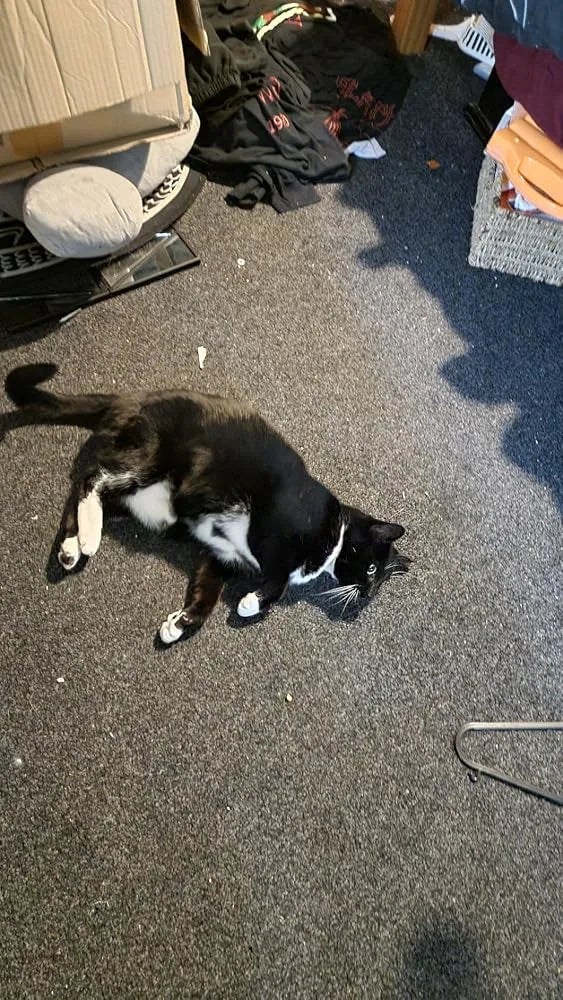
People ask this with a grin, and then, a bit more quietly, they ask it properly. Because the reaction does look like something. A cat that normally sits in judgement on the back of the sofa is suddenly rolling on the floor with its eyes half closed, kicking at nothing, dribbling slightly. Is that all right? Are we giving the cat a drug?
We sell catnip, so we've thought about this more than most. Here's the honest answer, including the part that's a bit like a high and the parts that aren't.
What's actually happening
Catnip is a plant in the mint family. Its leaves and flowers carry an oil, and the main thing in that oil is a compound called nepetalactone. When a cat sniffs it, the scent reaches receptors in the nose, and that sets off the rolling, rubbing and chasing you've seen.
For decades the explanation stopped there: it mimics something, probably a pheromone, and the cat responds. In 2021 a research team at Iwate University in Japan went further. They measured beta-endorphin in cats' blood before and after exposure to the compound, and found it rose sharply. Beta-endorphin is the body's own opioid; it's what gives a runner a high and what makes a good meal feel good. Then they gave the cats a drug that blocks opioid receptors, and the rolling and rubbing stopped. The study is in Science Advances, and we've written up the rest of it in Why do cats like catnip?
So yes: the pleasure is real, it's chemical, and it works through the same system that drugs of that kind work through. That's the part that's like a high.
Why that isn't a drug
Here's the part that isn't.
A drug is something taken into the body that changes how it works: swallowed, breathed into the lungs, absorbed through the skin. Its effect depends on the dose, it can build up, and the body can adapt to it. None of that is true of catnip.
Nothing is consumed to get the effect. The cat sniffs a smell, and its own brain does the rest. The endorphins are the cat's, made by the cat, in the amounts the cat makes them. The catnip is the trigger, not the substance. A closer comparison than any drug is a dog seeing a tennis ball, or a person smelling bread baking: a sensory cue that sets off a response the body already had ready.
And because it's a response to a smell, it has a built-in off switch. After about ten minutes the cat stops responding and won't respond again for a while, however much catnip is in the room. You can't give a cat more of the effect by giving it more catnip. We've described the whole sequence in What does catnip do to cats?
Why it can't be addictive
Addiction needs three things catnip doesn't have.
Tolerance. With an addictive substance, the same dose does less over time, so the user takes more. Catnip doesn't work that way: the same pinch gets the same reaction in a year's time. If anything, using it every day makes the reaction smaller, because the novelty wears off, which is the opposite problem and fixes itself with a week's break. We've covered that in How often can you give a cat catnip?
Craving. Cats don't look for catnip between sessions. A cat that had a pouch open last week doesn't go hunting for it this week. It's enjoyed when it turns up and forgotten when it doesn't.
Withdrawal. Stop giving it and nothing happens. No change in mood, appetite or behaviour. A cat that's never had it and a cat that had it yesterday are the same cat.
That's why vets don't warn against it and why it's sold in every pet shop. Not every cat responds, and that's genetic; a lot of cats don't. For the ones that do, it's a ten-minute good time with no bill afterwards.

Is there a comedown?
Sort of, and it's a nap. Most cats finish a session by washing and going to sleep, the way they would after a proper play. That's the endorphins settling and the cat having used some energy, not a crash. Cats that eat catnip rather than sniff it tend to skip the lively part and go straight to the sleepy part, which is why some owners think it calms their cat. We've written about that side of it in Does catnip calm cats down?.
Can a cat overdose?
No. There's no dose, so there's nothing to overdose on. The one way to have too much is to eat a lot, which some cats will do if a pile is left out, and the result is an upset stomach for a day, the same as after a lot of grass. We've gone through that in Can cats eat catnip? and the full safety picture in Is catnip bad for cats?
Does it do anything to people?
No. People don't have the receptors that respond to nepetalactone. You can smell it (minty, a bit lemony), and that's all. There's an old story that it does something stronger, which traces back to a 1969 report in an American medical journal of people smoking catnip. Two months later a letter to the same journal pointed out that the photograph labelled cannabis in the report actually showed catnip. Catnip tea has been drunk for centuries as a mild herbal tea, which tells you how strong it is for us.
Is it legal?
Yes, everywhere. It's a garden herb. You can grow it on a windowsill, and in a lot of British gardens it's growing whether anyone planted it or not.
So should you feel guilty?
No. A cat on catnip is a cat enjoying a smell, very much, with its own chemistry, for ten minutes, and then forgetting about it. The kindest version is fresh catnip, used as a treat rather than a habit: a pinch crushed between the fingers, on a toy or the floor, and then step back.
Ours is one ingredient, dried catnip leaf and flower, grown on a family farm in South Africa, picked by hand and air-dried the same season. The 30g pouch is £9.99 as a one-off, or £4.99 for the first pouch on Subscribe & Save and £7.49 every eight weeks after that. If your cat is one of the ones that shrugs, our money-back cat guarantee covers it: tell us within 14 days of delivery and we'll refund, nothing to send back.

Related guides: Why do cats like catnip? · What does catnip do to cats? · Is catnip bad for cats? · Can cats eat catnip? · How often can you give a cat catnip? · Does catnip calm cats down? · The Catnip Guide
Questions cat owners ask
Does catnip get cats high?
The reaction looks like it, and the pleasure is real, but it's a smell triggering the cat's own feel-good chemicals, not a substance entering the body. A 2021 study found endorphin levels rose when cats sniffed it and that blocking those receptors stopped the rolling and rubbing.
Is catnip a drug?
No. A drug is something taken into the body that changes how it works. Catnip's effect comes from scent reaching the nose; nothing is consumed, nothing builds up, and the response ends on its own. It's closer to a dog seeing a tennis ball than to anything you'd call a drug.
Is catnip addictive?
No. Cats don't seek it out between sessions, don't miss it if it stops, and show no withdrawal. There's no tolerance to build, so the same pinch works in a year's time as it does today.
Can a cat overdose on catnip?
No. The reaction switches off after about ten minutes however much catnip is there, and the cat won't respond again for a while. Eating a lot can upset the stomach for a day, the same as grass, but that's the limit.
Does catnip get humans high?
No. People don't have the receptors that respond to it. A 1960s medical report claiming it did was later found to have mistaken another plant for catnip.
Is catnip legal?
Yes, everywhere. It's a garden herb in the mint family, sold in pet shops and grown in back gardens.


